New Zealand's data centre market is entering a significant period of growth.
Industry analysis indicates there are approximately 56 operational data centres across New Zealand, with a further 20 facilities planned, consented or under construction. Installed capacity is estimated at approximately 100MW today, with forecasts supporting growth to around 315MW by 2030.
However, demand is not the primary challenge.
The industry's greatest constraint is increasingly the ability to deliver powered capacity. Power availability, grid connections, substations, transmission infrastructure, land access and consenting all influence whether projects can be delivered when customers need them.
As developers, operators and contractors work to accelerate delivery programmes, modular construction provides an opportunity to manufacture critical supporting infrastructure while site works continue in parallel.
This approach can improve programme certainty and allow projects to progress multiple workstreams simultaneously.
Modular and Hybrid Data Centre Solutions
Not every component of a data centre development needs to be built traditionally. A-Line can manufactures a range of modular facilities designed to support data centre projects throughout New Zealand.
Electrical and Switch Rooms
Purpose designed modular buildings for housing switchgear, distribution systems and associated electrical infrastructure.
UPS Rooms
Factory manufactured structures designed to accommodate UPS systems and supporting services.
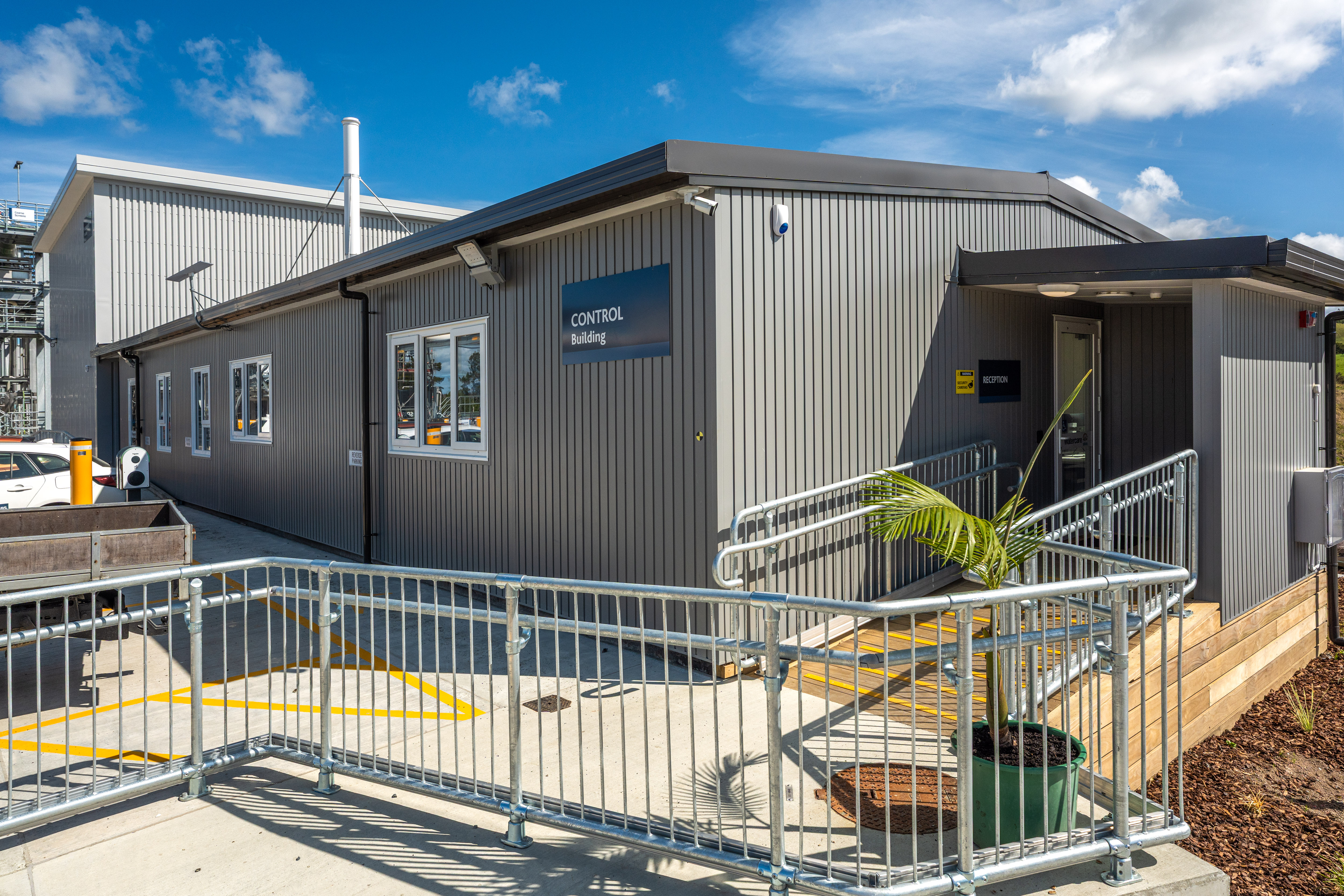
Control and Operations Rooms
Dedicated operational environments for monitoring, management and site control functions.
Administration Buildings
Flexible office accommodation and support spaces for operational teams, contractors and visitors.
Gatehouses and Security Buildings
Buildings designed to support controlled access and site security requirements.
Welfare Facilities
Amenities buildings that provide welfare and support facilities for site personnel.
Plant Enclosures
Modular structures designed around project specific mechanical and electrical plant requirements.
Corridor Systems
Interconnecting modules providing safe and protected movement between buildings and operational areas.
Data Centre Growth Depends on Delivery Certainty
The New Zealand market is increasingly being shaped by larger cloud, AI and platform workloads rather than traditional enterprise demand. Future growth is expected to come from fewer, larger customers that require significant power capacity and greater confidence around delivery timelines.
Industry analysis suggests that the operators and developers best positioned for growth will be those able to align infrastructure, power and construction delivery effectively.
For project teams, this means construction methodology is becoming an increasingly important consideration.
Modular construction cannot solve power constraints or consenting challenges, but it can help reduce risk within the building delivery programme by allowing supporting infrastructure to be manufactured while site works continue.
Early Engagement Matters
Modular buildings achieve the greatest value when considered early in project planning.
During feasibility and concept design, building layouts, service routes, equipment strategies and installation requirements remain flexible. This creates opportunities to assess where modular construction may be appropriate and how it can integrate with the wider project.
Early engagement allows project teams to understand:
- Which facilities are suitable for modular delivery
- Potential transport and installation requirements
- Structural and equipment load considerations
- Opportunities for standardisation
- Potential programme advantages
Once major design decisions have been fixed, opportunities to optimise modular solutions are often reduced.
Frequently Asked Questions
What is a modular data centre building?
A modular data centre building is a facility manufactured offsite and transported to site for installation. Examples include electrical buildings, UPS rooms, administration facilities, control rooms and operational support spaces.
What parts of a data centre can be modular?
Supporting infrastructure such as electrical switch rooms, UPS rooms, control rooms, administration buildings, welfare facilities, gatehouses, plant enclosures and corridors can often be delivered using modular construction.
Why is modular construction used in data centre projects?
Modular construction allows building manufacture to take place while site preparation and enabling works continue, helping improve programme certainty and reduce on site construction activity.
When should modular construction be considered?
The most effective time is during feasibility and early design, when project layouts and infrastructure strategies remain flexible.
Can modular construction be used alongside traditional construction?
Yes. Many data centre developments adopt a hybrid approach where supporting infrastructure is manufactured offsite while other elements are delivered using traditional construction methods.